A commercial overhead door that starts to sag rarely stays a small problem for long. Commercial door sagging can make a door bind in the tracks, leave gaps at the floor, put extra strain on the operator, and interrupt access to a loading area or work bay. For New Jersey and NYC metro area facilities that move products, vehicles, or equipment every day, a door that does not run correctly can affect safety, security, and the work schedule.

A sagging door is not always caused by one failed part. It may be the result of worn rollers, loose hinges, track alignment problems, cable or spring issues, structural movement, or impact damage. The right repair begins with identifying what has changed and keeping the door out of service when its movement is unsafe.
What Commercial Door Sagging Looks Like
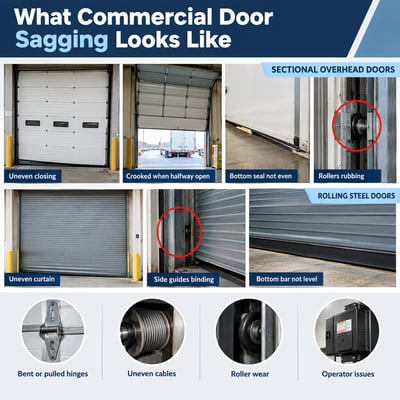
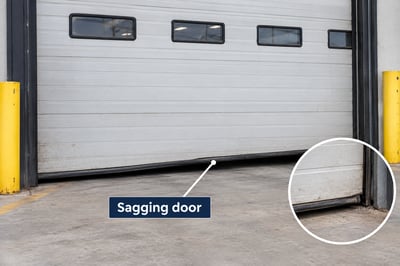
Sagging does not always mean the full door is visibly hanging at an angle. On a sectional overhead door, one side may rise more slowly than the other, the bottom seal may no longer meet the floor evenly, or the door may appear crooked when it is halfway open. You may hear scraping, popping, or metal-on-metal noise as it travels.
In other cases, the issue shows up in the hardware first. Rollers can rub hard against the track, hinges can look bent or pulled away from the sections, and cables may appear uneven on the drums. An operator may struggle, stop before the door is fully open, or reverse because the door is no longer moving as expected.
A sagging rolling steel door can show similar symptoms, including an uneven curtain, side guides that bind, or a bottom bar that does not sit level. These conditions should be evaluated by a qualified commercial door technician. Rolling doors, sectional doors, high-speed rolling doors, and fire-rated doors each have different components and service requirements.
Common Causes of Commercial Door Sagging
Wear is a frequent cause. A high-cycle commercial door can open and close hundreds or thousands of times over its service life. Rollers wear down, hinge fasteners loosen, and tracks can gradually move out of position. Small amounts of play in several components can add up until the door no longer travels squarely.
Cable and spring problems are another serious possibility. On a sectional door, the counterbalance system helps lift the door evenly. A damaged cable, worn cable drum, broken spring, or improperly balanced spring system can pull one side differently from the other. The result may look like a sagging door, but the underlying issue is a high-tension system that should not be adjusted by untrained staff.
Impact damage is common around busy loading docks and warehouse bays. A forklift, delivery vehicle, pallet jack, or stored material can bend a vertical track, damage a door section, or shift supporting hardware. Even a light impact can create enough misalignment to cause binding during the next operating cycle.
Building movement and mounting conditions matter as well. Settling, corrosion around mounting points, loose jamb brackets, and damaged steel framing can change how the tracks support the door. In older facilities, the condition of the opening itself may need attention along with the door hardware.
Weather can make existing wear more noticeable. Cold temperatures can stiffen lubricants, while water intrusion and road salt can accelerate corrosion on exposed components. Damaged weatherstripping does not usually cause sagging by itself, but it can allow moisture and debris into areas that contribute to premature wear.
Why a Sagging Door Should Not Be Ignored
The immediate concern is safe operation. A door that binds or runs unevenly places extra load on rollers, hinges, tracks, cables, and the operator. Continuing to use it can turn a straightforward adjustment or component replacement into a more extensive repair.
There is also a security and energy concern. A door that does not close level can leave gaps that allow wind, rain, pests, and unauthorized access into the building. At a conditioned facility, even a modest gap can make temperature control more difficult near the loading area.
For facilities with fire-rated rolling doors or other code-sensitive openings, improper door movement needs prompt attention. These kinds of doors require specialized inspection, testing, and repair practices. Do not force it open or closed if it is binding, damaged, or out of alignment. Document the condition and arrange qualified service.

What Your Team Can Check Safely
Before calling for service, staff can provide useful observations without touching high-tension or moving components. Note whether the door is fully open, fully closed, or stuck partway. Record when the problem began, whether there was a recent impact, and whether the door is making unusual noise.
From a safe distance, look for obvious track damage, loose hardware, broken panels, frayed cables, or a bottom seal that is uneven against the floor. Check whether boxes, pallets, ice, debris, or dock equipment are obstructing the door path. If the door is electrically operated, confirm that the area is clear and that no one is attempting repeated cycles while the door is binding.
Do not loosen cable drums, brackets, springs, tracks, or bottom fixtures. These parts can be under substantial tension, even when the door is closed. Avoid trying to straighten tracks with a hammer or pulling a crooked door by hand. That approach can damage the door further and expose employees to injury.
If the door is not safely seated and secure, restrict access to the opening until a technician can inspect it. A clear report of the symptoms helps a service team arrive prepared with the appropriate parts and equipment.
Professional Repairs for Commercial Door Sagging
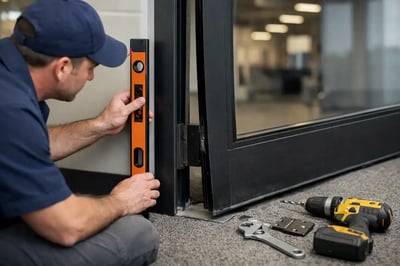
The repair depends on the cause. A technician may realign and secure tracks, replace worn rollers and hinges, repair damaged sections, correct cable routing, replace cables, or adjust the counterbalance system. If an operator has been strained by an unbalanced door, it should also be inspected. Repairing the door without checking the operator can leave a separate problem behind.
Some damage calls for replacement rather than repair. A severely bent track, compromised door section, corroded hardware, or aging door with recurring failures may not be a good candidate for piecemeal work. The practical decision depends on the door's age, daily cycle count, condition of the opening, availability of replacement parts, and the cost of downtime.
For a facility with several doors, a single sagging door may be a maintenance signal rather than an isolated event. Similar doors installed at the same time often have comparable wear patterns. A planned inspection can identify rollers, cables, weather seals, and operator components that need service before another opening becomes unavailable.
Preventing Future Door Problems
Proactive maintenance is the most reliable way to catch commercial door sagging early. During the scheduled service, technicians can inspect the door's balance, cables, springs, rollers, hinges, track alignment, fasteners, safety devices, and operator performance. They can also identify weatherstrip damage and loading dock conditions that affect the opening.
The service interval should match how the door is used. A lightly used service-bay door does not face the same demands as a warehouse door serving multiple truck deliveries each day. High-cycle doors, doors near forklift traffic, and doors exposed to moisture or corrosive conditions often need more frequent attention.
We have served local businesses for over 40 years with commercial door repair, installation, maintenance, loading dock equipment, and specialized inspections. When a door is sagging, early professional service helps protect people, equipment, and daily operations.
Schedule your garage door service. Contact our team of experts to get reliable service and the professional support your commercial and industrial garage doors and loading dock equipment deserve!
Contact Us
Phone: 973-471-3358
Email: info@rollupdoorsnjny.com
Office: 20 Meta Lane, Lodi, NJ 07644