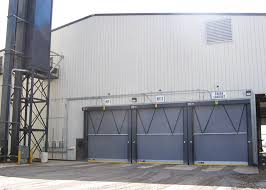
When a commercial door fails, it’s often at the loading dock. While many assume all overhead doors experience similar wear and tear, the reality is very different. Loading dock doors operate in one of the most punishing environments in any facility. Higher cycle counts, constant vibration, temperature extremes, and ongoing mechanical stress all contribute to accelerated failure.
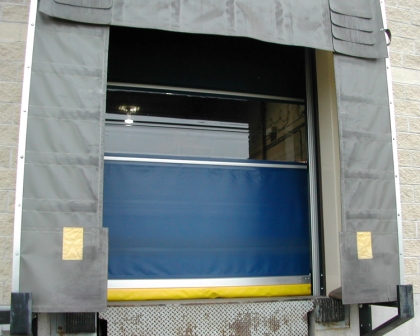

For warehouses, distribution centers, food facilities, and manufacturing plants throughout New Jersey and the NYC metro area, understanding why dock doors fail first can help prevent downtime and costly emergency repairs. It also explains why high-speed and high-performance commercial roll-up doors are increasingly the preferred solution for demanding dock applications.
Loading bay doors cycle far more frequently than standard commercial doors. A typical storefront or warehouse door may open a handful of times per day. In contrast, a busy loading dock overhead door can cycle dozens, or even hundreds, of times daily. Each delivery, shipment, and forklift movement adds another open-and-close sequence. Over time, that repetition compounds wear on springs, chains, tracks, and operators.
High-speed coiling doors are specifically engineered for high-cycle environments. Their advanced drive systems and reinforced components are designed to handle continuous operation without premature breakdown. Traditional overhead doors, especially those not built for heavy industrial use, often struggle to keep up with dock traffic demands.
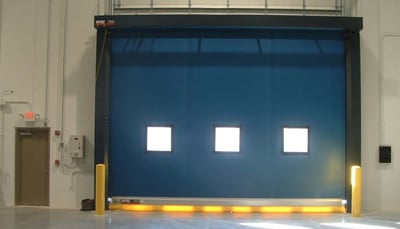
Vibration is another major contributor to failure. Loading docks are constantly exposed to the impact and movement of tractor-trailers backing into position. Dock plates drop. Forklifts cross thresholds. Heavy pallets move in and out all day long. That constant vibration travels through the building structure and into the door system.
Over time, vibration can loosen hardware, misalign tracks, and strain motor assemblies. Standard commercial garage doors may not be designed to withstand this level of ongoing structural movement. High-performance overhead doors, however, are built with heavy-duty guide assemblies and durable mounting systems that better absorb the stress of dock activity.
Temperature exposure adds another layer of strain. Unlike interior doors, exterior loading dock doors separate conditioned warehouse space from the outdoors. In New Jersey and New York City, that means facing freezing winters, hot summers, wind, rain, and snow. Rapid temperature changes can affect metal components, springs, and seals. Expansion and contraction occur repeatedly throughout the year.

Rolling high-speed doors help minimize temperature impact by opening and closing quickly, reducing the amount of time the dock opening is exposed. Their tight sealing systems also help maintain interior climate control. This not only improves energy efficiency but also reduces stress on door components caused by prolonged environmental exposure.
Mechanical stress is one of the most overlooked reasons dock doors fail first. Chains stretch. Springs fatigue. Operators work harder under heavy daily use. As these components wear down, the door becomes slower, noisier, and less reliable. Eventually, small performance issues lead to full system failure.
High-performance commercial roll-up doors are engineered to distribute mechanical loads more evenly. Many models use direct-drive motors and advanced control systems that reduce strain on traditional chain and sprocket assemblies. With fewer moving parts under extreme tension, there is less opportunity for early failure.
Another factor is impact. Loading docks are high-traffic zones where forklifts operate at speed. Accidental contact with door curtains or bottom bars is common. Standard overhead doors can suffer panel damage, track bending, or complete derailment from a single collision. High-speed coiling overhead doors often incorporate breakaway or flexible curtain systems designed to release upon impact and reset quickly. This minimizes downtime and prevents costly structural damage.
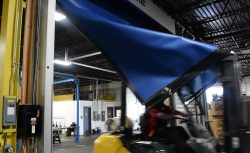
All of these conditions explain why dock doors require specialized repair and service, not generic garage door maintenance. A technician who typically services light commercial or retail doors may not address the unique stress factors found at busy loading docks. High-cycle environments demand experienced professionals familiar with this kind of commercial roll-up doors and industrial-grade components.
Planned maintenance is critical. Routine inspections of springs, operators, guide tracks, and safety systems can identify wear before it results in failure. For facilities operating multiple dock positions, even one inoperable door can disrupt workflow, delay shipments, and impact revenue.
Upgrading to high-performance rolling doors is often a proactive solution. Faster cycle speeds improve efficiency, while reinforced construction enhances longevity. In high-volume logistics environments, the investment quickly pays for itself through reduced downtime, fewer emergency repairs, and improved operational flow.
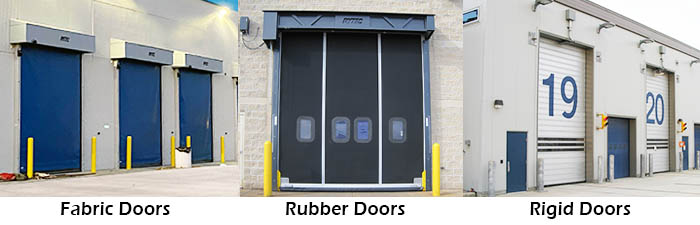
If your loading dock doors are experiencing frequent breakdowns, slow operation, or repeated part replacements, it may be time to evaluate whether your current system is designed for dock-level demands. High-speed commercial roll-up doors are built for exactly this kind of workload.
We specialize in the installation, repair, and maintenance of high-performance commercial roll-up doors throughout New Jersey and the New York City metro area. Our team understands the unique challenges loading docks face and provides solutions designed for durability, safety, and long-term reliability.
If your dock doors are failing first, we can help you determine why, and recommend the right high-speed solution to keep your operation moving. Contact our team today at 973-471-3358 or email info@rollupdoorsnjny.com to get expert assistance and fast, reliable service.